Okular 如何支持可持续发展?


Medal by Ongycon, Green Lamp by Stefania Servidio, User by Guru, Ethics by Ruben Hojo from Noun Project (CC BY 3.0)

环保认证
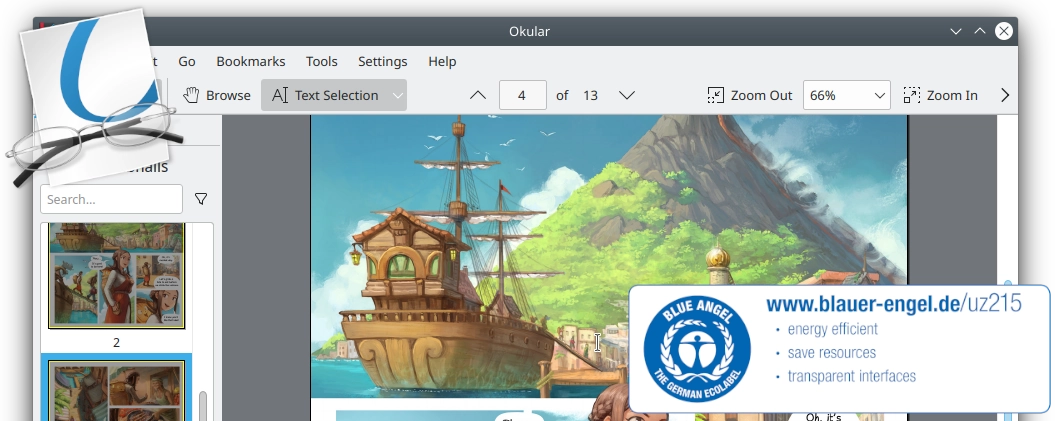
很荣幸,Okular 是世界上首个接受蓝天使印章的计算机软件, 这是 2022 年的事。蓝天使于 1978 年 提出,它是世界上首个生态标签, 是德国政府的官方生态标识。2020 年,德国环境机构 (Umweltbundesamt) 提出桌面软件的评奖标准, 包括三个主要类别: (A) 资源与能量效率, (B) 潜在的硬件操作寿命以及 (C) 用户自治权。 显示了契合这些标准的软件产品使更长久更高效的硬件使用成为可能。 对详细信息感兴趣吗?看看 KDE Eco 手册 "在自由软件开发中贯彻落实蓝天使标准" 。
透明度和自治性
KDE wants to put you in the driver's seat with all of its software, including Okular. Okular is available under a Free Software license, and the source code is readily available at Okular's repository. With Okular's data format documentation, you will never again be subject to vendor lock in from proprietary formats. Moreover, enhancing Okular's functionality is possible with its API Documentation. Install and uninstall instructions are available to make sure users are not burdened by unwanted software components on their machines. And for those who want long-term support for their favorite software, Okular's full list of release announcements ǵoes all the way back to 2006 and will continue well into the future.
By guaranteeing transparency and autonomy, developers and users can ensure that their software reduces environmental harm in more ways than one, whether by keeping devices in use for longer, or by reducing the software’s use of energy and resources while in use.
伦理与隐私
Being Free & Open Source Software, Okular's source code is available for all to use, study, share, improve, and most of all, enjoy. KDE software will always be available to all without being restricted to materially, educationally, or socially privileged people. KDE's Code of Conduct provides guidelines to support everyone in the community for a positive and inspiring atmosphere. This is necessary for software development that meets all its users' needs, wherever they are, on whatever device they own -- and not just ones vendors want to sell.
KDE envisions a "world in which everyone has control over their digital life and enjoys freedom and privacy." Freedom from unethical practices such as unwanted data collection and tracking or psychological targeting is not only good for society, but it also reduces the carbon footprint of digital technology. A default opt out for ads and telemetry decreases energy demands on both end-user devices and servers running the ads or mining the data, and it reduces the energy needed for network traffic. KDE's Privacy Policy ensures that its software does not collect any information from users except when users actively and explicitly opt in to it!
KDE is software for you, by you!

Want to learn more about sustainable software?
KDE has the goal of providing software that reduces software's environmental impact. Let's make energy efficient software and digital sustainability part of the Free Software community. We can live up to our responsibility for this and future generations!
参与贡献!Okular's Path Toward Sustainability
In 2022 Okular was the awarded the Blue Angel ecolabel for sustainable software design, becoming the first eco-certified computer program within the Global Ecolabelling Network.
With KDE’s long-standing mission and guiding vision since its founding in 1996, as well as the talent and capabilities of its community members, KDE is a pioneer in championing sustainable software. In 2021 KDE started KDE Eco, a project with the goal of putting KDE and Free Software at the forefront of sustainable software engineering, and in 2022 the KDE community voted to have Sustainable Software as one of its overarching goals.
Sustainability is not new for Free & Open Source Software (FOSS)—the four freedoms have always made Free Software sustainable software. But now, the two pillars of FOSS—transparency and user autonomy—have wider recognition for their impacts on sustainability, and were incorporated into the sustainability criteria set by the German Environment Agency through the Blue Angel ecolabel.
Free & Open Source Software guarantees transparency and hands control over to users, rather than obligating them to work with certain vendors or service providers. This allows users to decide what they want from the software they use and, in turn, make decisions about the hardware they use as well. Users are able to reduce the energy consumption of their programs with little or no loss in functionality, installing only what they need, no more and no less; they can also avoid invasive advertising or data-mining options which run processes in the background, further consuming resources on the device and in the network. As for FOSS developers, they typically continue to support hardware that the industry would be eager to make obsolete, providing users with up-to-date and secure software for devices that might otherwise be discarded as e-waste and end up polluting landfills.